RULES = FREEDOM

Tanagram is a rules engine for coding agents and code reviews that frees tech leads and platform teams from sounding like a broken record across PRs, incidents, and architecture migrations.

PassUserIdViaTrpcContextRule Active

Always pass userId through the context option, not as part of the query input. The tRPC client extracts userId from context and sends it as a header (x-user-id).

src/api/users.ts
12trpc.user.get.query({ userId })

Violation: userId should be passed via context option.

Fix: trpc.user.get.query({}, { context: { userId } })

Trusted by tech leads
"

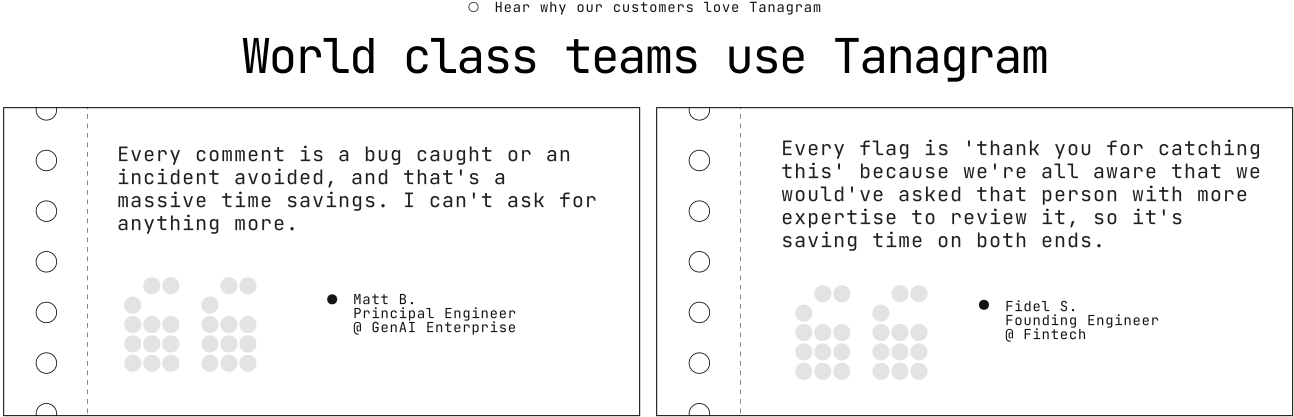
Every comment is a bug caught or an incident avoided, and that's a massive time savings. I can't ask for anything more.

M

Matt B.

Principal Engineer @ GenAI Enterprise

"

Every flag is 'thank you for catching this' because we're all aware that we would've asked that person with more expertise to review it, so it's saving time on both ends.

F

Fidel S.

Founding Engineer @ Fintech

The Problem

Everyone has access to the same generic coding agents.

Only you understand how you code.

Coding agents like Cursor, Claude, and Copilot are multipliers. Given great inputs, they can produce great code.

But someone needs to tell them that you deprecated this database column yesterday, someone caused an incident last week because they made a change in one place but not another, and you're trying to get everyone to switch from cron jobs to workflows.

So you, as a tech lead, keep correcting the same mistakes. Your new hires keep repeating old patterns. And your coding agents keep suggesting things you've already fixed.

Unless you have rules in place to multiply the right things.

How it works

1

Tanagram analyzes your repos to generate rule suggestions

(or write your own)
2

Integrate with coding agents to automatically steer their outputs

3

Automatically double-check everything in PRs

Example rules

Different kinds of rules from our users, lightly edited for anonymity

Security & Reliability

Verify Team Membership

API endpoints with a `teamID` parameter (directly or via a parent router) must inject `verified_team_member` as a dependency.
A letter from the team

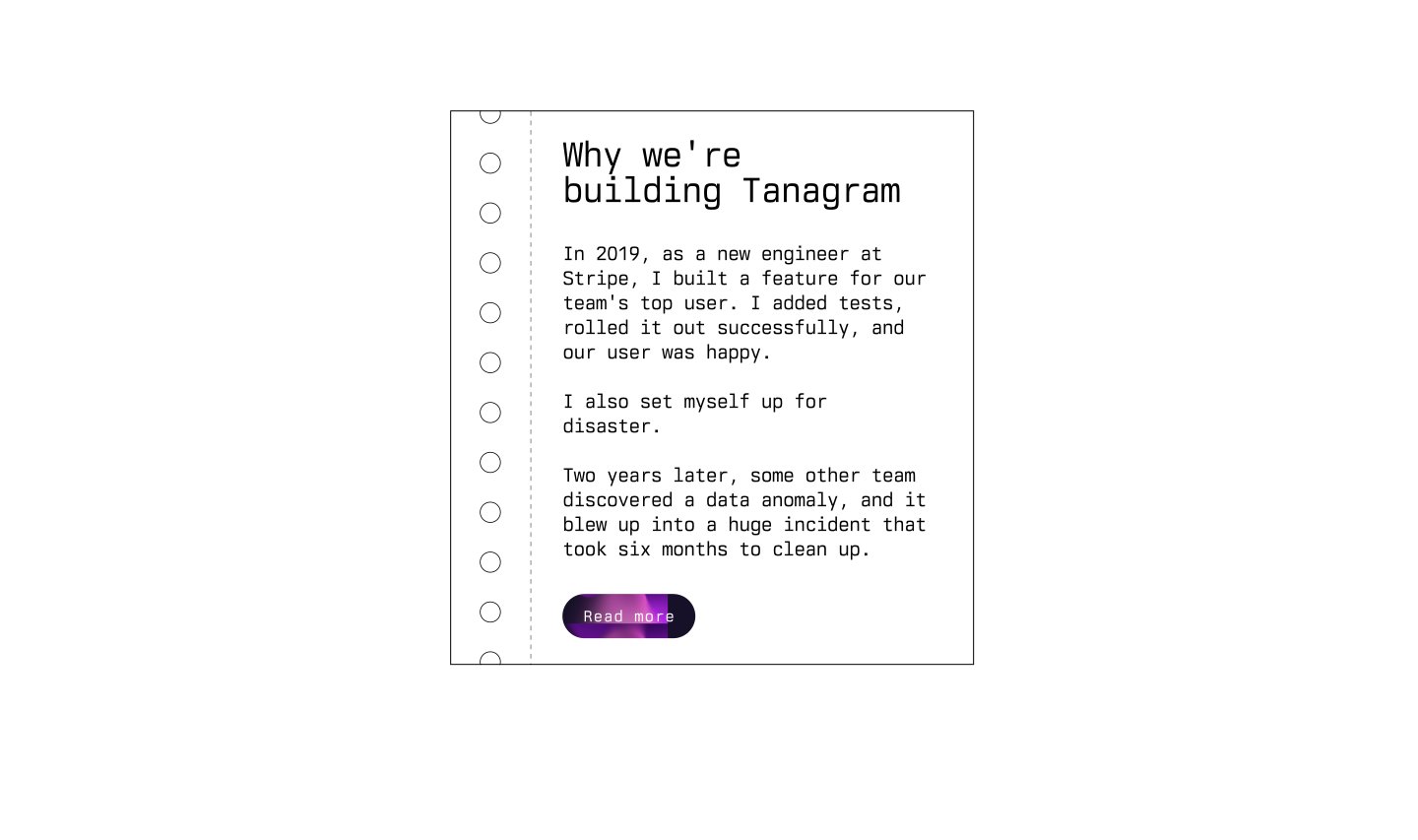
Why we're building Tanagram

In 2019, as a new engineer at Stripe, I built a feature for our team's top user. I added tests, rolled it out successfully, and our user was happy.

I also set myself up for disaster.

Two years later, some other team discovered a data anomaly, and it blew up into a huge incident that took six months to clean up.

Enterprise Ready

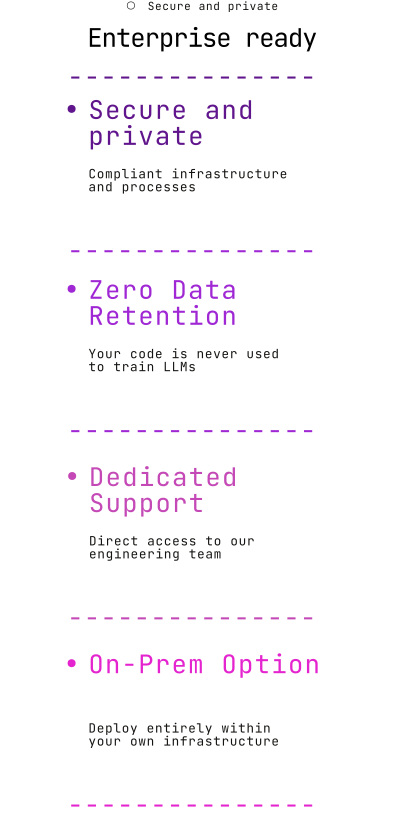
Secure and Private

SOC II Type 2

Compliant infrastructure and processes

Zero Data Retention

Your code is never used to train LLMs

Dedicated Support

Direct access to our engineering team

On-Prem Option

Deploy entirely within your own infrastructure

FAQ

Common questions about Tanagram

1

What is Tanagram?

Tanagram is 1) a list of rules that engineering teams want to enforce on their codebase, 2) a bot for evaluating those rules on pull requests, and 3) a hook and skill for coding agents to automatically generate code that follows those rules.
2

What are rules?

Rules encode patterns, conventions, and lessons that your team has accumulated over time. Tech leads and platform owners can write rules to avoid repeating themselves in code reviews or when onboarding new engineers. Tanagram also generates rules automatically from a variety of data sources.
3

What can I do with Tanagram?

For tech leads, staff+ engineers, and platform owners, Tanagram lets you: * Automate code review comments where you've been repeating yourself * Distribute knowledge that you know about, that other engineers don't * Roll out migrations/refactors immediately, instead of over weeks or months
4

Is Tanagram a coding agent?

No. Tanagram is not a coding agent. Instead, Tanagram integrates with existing coding agents like Claude and Cursor to make them reliably generate code that follows your team's rules.
5

Is Tanagram a code review bot?

Not entirely. Tanagram has a code review feature, but we also proactively integrate with coding agents to help them write better code _before_ code review.
6

How does Tanagram compare to AI code reviewers?

Tanagram catches problems that you _know_ you care about. Other AI code reviewers look for problems that you _don't_ know about. Our users use Tanagram alongside other AI code reviewers.
7

How does Tanagram compare to linters?

Tanagram's rules are easier to write and understand, and they can rely on fuzzy logic (see the examples above).
8

How does Tanagram integrate into my workflow?

Tanagram hooks into your coding agents to get them to generate code that follows your team's rules. Tanagram also automatically puts review comments on pull requests when new code doesn't follow your team's rules.
9

What coding agents does Tanagram work with?

Tanagram works with Claude and Cursor for now.
10

Does Tanagram slow down CI/CD?

No. Tanagram runs in parallel with your existing checks, and typically finishes in under a minute.
11

Is my code sent to third-party LLMs?

In our coding-agent integration, Tanagram calls the coding agent you're already using. For evaluating pull requests, Tanagram uses LLMs from Anthropic and OpenAI. We have zero-data-retention agreements in place with both entities.

Make rules. Regain freedom.